The land component of the Malian Armed Forces—the Army—celebrated the 66th anniversary of its founding on Thursday, October 1, 2026.
The event took place at the dojo grounds of the 33rd Paratrooper Commando Regiment in Djicoroni-Para, under the theme: "The Army, 66 years of service to the Nation: cohesion and resilience for the sovereign defense of Mali."
The ceremony brought together senior military officials, Army veterans, and numerous guests.
Comprising three branches—Infantry, Artillery, and Armored Cavalry—the Army is a key component of the Malian Armed Forces and remains central to the country's land defense system.
The date of October 1 marks the speech announcing the creation of the Malian Army, delivered by the late Colonel Sékou Traoré, who was then a Captain and Chief of Staff of the Army.
On this occasion, the Commander of Military Region No. 3 (Kati), Colonel Pascal Berthe, highlighted the historical significance of the date; he noted that it marks the moment Mali reclaimed its military sovereignty following the dissolution of the Federation of Mali.
Colonel Pascal Berthe emphasized that this day should no longer go unacknowledged, noting that the Army has played a role in every struggle related to independence and the consolidation of national sovereignty. It has thus contributed to the defense of the homeland and the preservation of Mali's territorial integrity. In his address, the Chief of Staff of the Army, Brigadier General Toumani Koné, emphasized that the establishment of the Malian Armed Forces is inextricably linked to that of the Army. He noted that the Army served as the young Republic of Mali’s first organized instrument of defense, despite the modest resources available at the time.
He recalled that, at its inception, the Army consisted of four battalions deployed across the country: the first in Ségou, the second (Western Sahelian Battalion) in Kayes, the third in Kati, and the fourth (Eastern Sahelian Battalion) in Gao. At that time, its strength was estimated at approximately 1,500 personnel.
For his part, the Chief of the General Staff of the Armed Forces, Major General Elisée Jean Dao, reiterated that the Army forms the core component of the Malian Armed Forces. He commended the efforts made by the Malian people and the Government in support of national defense.
General Dao also noted that the commemoration of the Army’s founding—attended by representatives from other military branches and service directorates—reflects the cohesion within the military institution. He urged the FAMa to maintain their commitment to the fight against armed terrorist groups.
As a vital defense tool and a deterrent force, the Army has undergone significant organizational and operational transformations over its 66-year history to adapt to evolving threats and realities on the ground.
In this regard, Brigadier General Toumani Koné highlighted that the Army has notably strengthened its firepower, support, and protection capabilities. He emphasized that this transformation must continue through training, adaptation, modernization, and the continuous enhancement of capabilities.
These efforts are intended to enable the Army to better fulfill its missions of protecting the population and their property across the national territory, as well as safeguarding the country's interests.
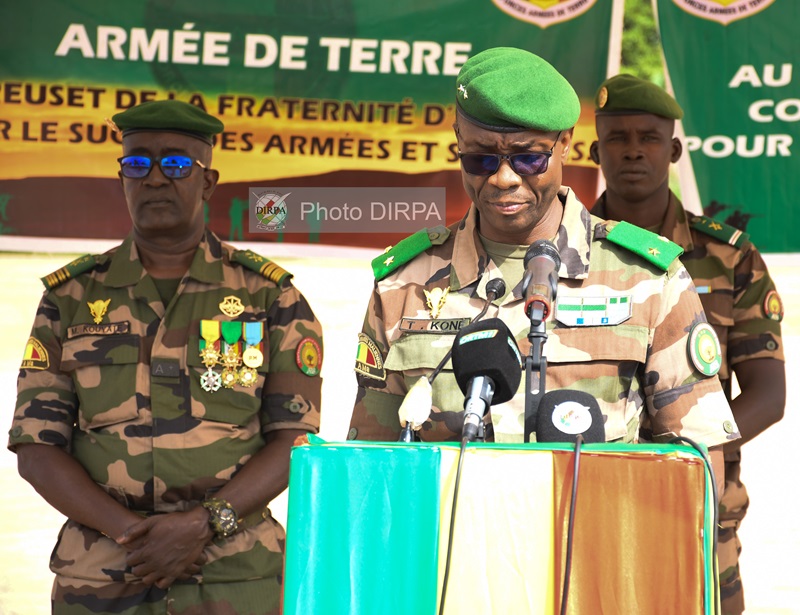
Addressing the terrorist threat, the Army Chief of Staff stressed the need for a professional, organized response grounded in intelligence, operational readiness, responsiveness, and the effective management of resources. He also placed cohesion at the heart of this effort, describing it as a primary strength, while noting that discipline remains the guiding principle.
He added that the military presence must be synonymous with security, professionalism, discipline, and trust.
Brigadier General Toumani Koné also paid tribute to the men and women who have served—and continue to serve—the nation within the Army with discipline, bravery, and patriotism. He expressed his gratitude to the authorities and the military leadership for the efforts made regarding equipment acquisition, infrastructure construction, training, and the improvement of living and working conditions for military personnel.
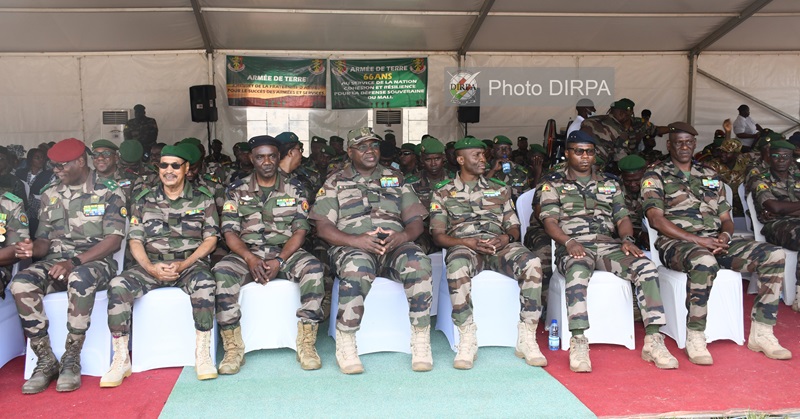
During the ceremony, a video chronicling the history and evolution of the Army was shown. Through various testimonials, speakers expressed their pride in the modernization efforts and the strengthening of the Malian Armed Forces' defense capabilities, particularly those of the land forces.
Furthermore, the younger generation was urged to cultivate patriotism, commitment, and a spirit of sacrifice in the service of the nation.
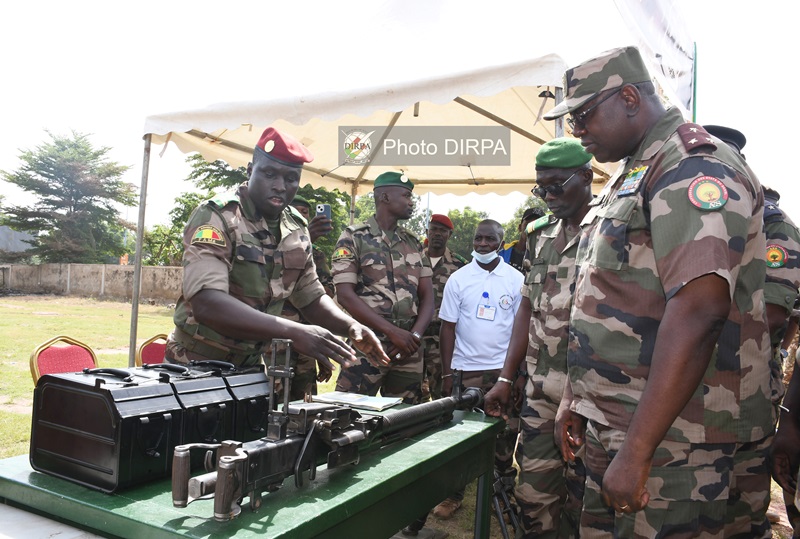
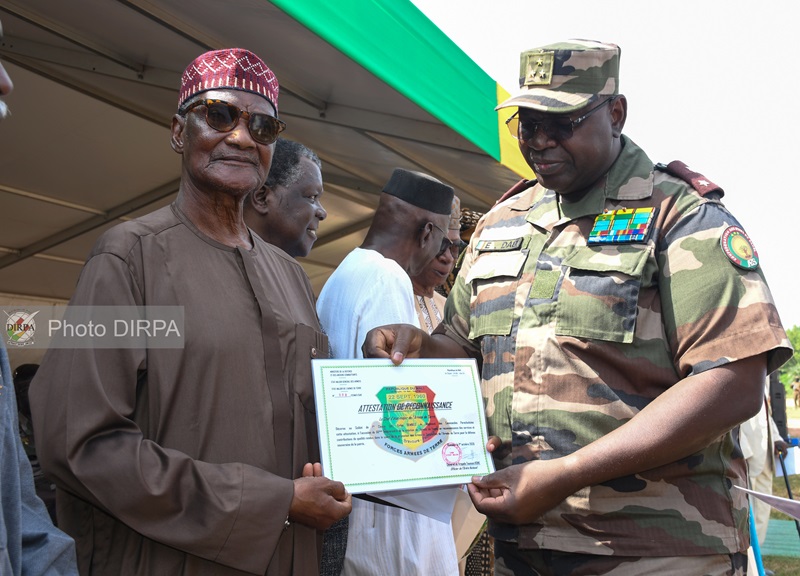
The ceremony concluded with the presentation of certificates of appreciation by the Chief of the General Staff of the Armed Forces, Major General Elisée Jean Dao, to retired Army personnel and civilians. A tour of the exhibition stands was another highlight of the celebration, marking the end of the commemorative activities for the Army's 66th anniversary.
Sgt. Salia "K." Sidibé